
建议所有的品牌内容营销人员学一下这篇文章
这篇帖子没有一句直接推销的话,但它成功地做到了以下几点:
- 展示了专业性: 作者展示了他们在 SaaS 和产品开发方面的经验。
- 建立了信任: 通过分享失败的教训和真实的困惑,作者显得真诚且谦逊。
- 提供了价值: 读者从中学到了宝贵的商业教训,这让他们对作者的品牌产生了积极的印象。
这是一个通过内容营销和社区参与来建立品牌形象和获取用户的经典案例。
(完整文章我放在末尾)
标题 “What 30k Free Users Taught Me About Charging $10/Month”
立即抓住注意力。它用3万和10美金这个数字,还有免费付费这种反差,制造了悬念,点击率不会太低

开头
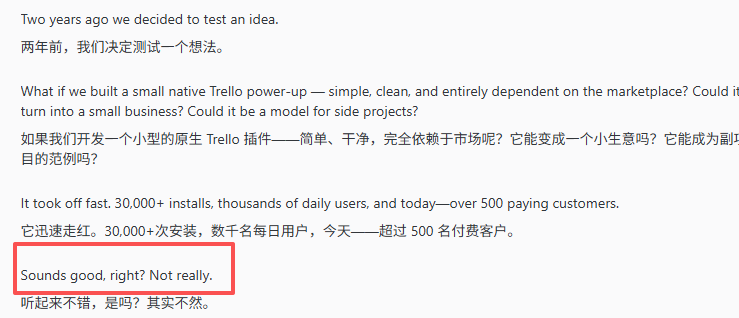
用“sounds good, right? Not really.”这个转折,前后制造了戏剧性冲突,引发了用户的好奇心,吸引用户继续读下去。
核心论点:深入分析问题和解决方案
内容:
-
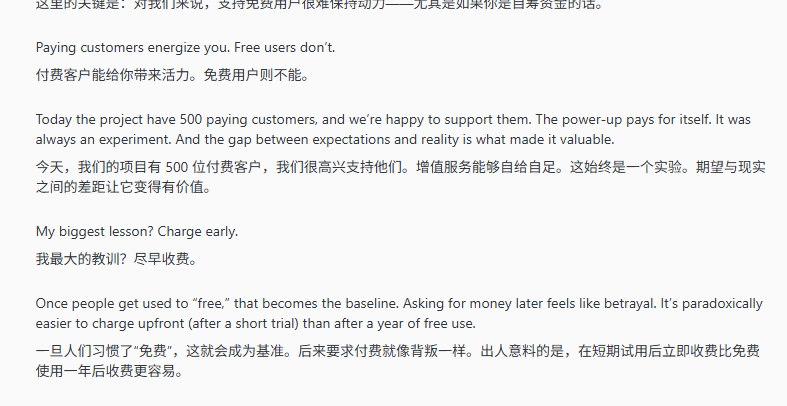
- 最核心的教训: “My biggest lesson? Charge early.” (我最大的教训?尽早收费。) 这是整篇文章的高潮,一个反直觉但极具价值的金句,很容易引发人的情绪。
- 论点三: 抛出了得到的宝贵经验——“付费客户能带来动力,免费用户不能。” 这是一种情感上的共鸣,而不是单纯的商业分析。
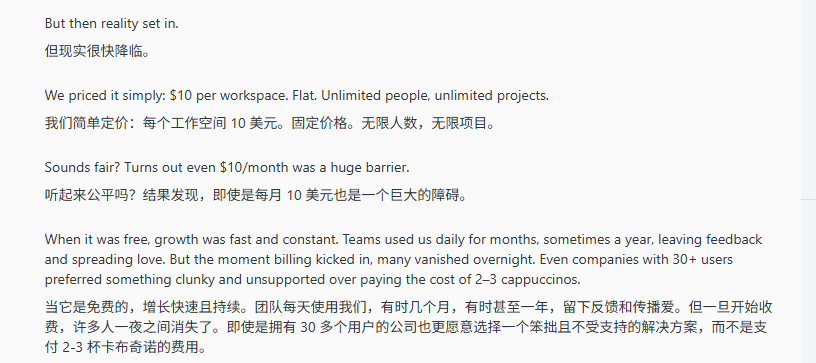
- 论点二: 提出了核心的冲突——为什么用户不愿意支付看似很低的费用。这是一个所有创业者都想知道答案的问题。而且作者真的很会制造冲突,用反差吸引人往下阅读
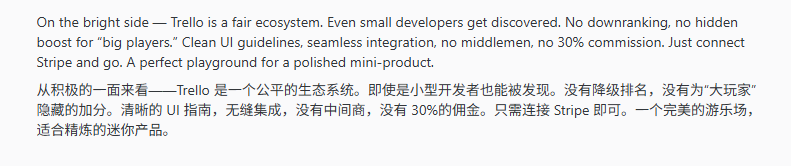
- 论点一: Trello 平台的优点,为自己的产品铺设一个积极的背景。这同时表明自己是社区的内部人士,增加了可信度。
这些内容让人感觉非常真实,而且也是真实的痛点,容易产生代入感,感觉自己有收获,建立的信任,也有过成绩所以非常专业。
总结与升华
内容: “So, can a trello power-up be a real business?” (那么,一个 Trello 插件能成为一门真正的生意吗?) 这部分回归了最初的问题,并给出了一个现实的、不夸大的答案。
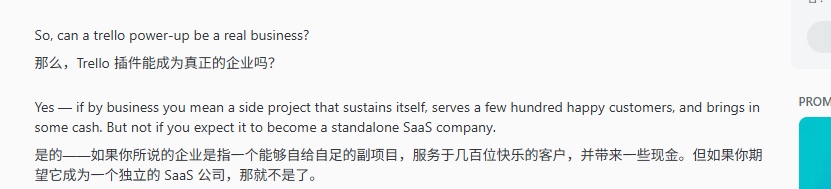
让读者感觉他们从这篇帖子中得到了一个完整的、有启发性的故事,而不仅仅是一个简单的结论。它告诉读者,即使不成为一个庞大的公司,这种尝试本身也是有价值的。
开放式结尾:邀请社区互动,留钩子
- 内容: “Have you faced the same wall with free users? How did you handle it?” (你是否也遇到过同样的问题?你是怎么处理的?)
- 这是软广告的关键一步。一定要留下钩子

reddit是一个吃软不吃硬的地方,一来上硬广也是一个非常伤害用户和社区和品牌的行为,说是软广,本质上是我们内容提供了什么价值,只是用更好的表现形式表现。
完整文章
What 30k Free Users Taught Me About Charging $10/Month
Two years ago we decided to test an idea.
What if we built a small native Trello power-up — simple, clean, and entirely dependent on the marketplace? Could it turn into a small business? Could it be a model for side projects?
It took off fast. 30,000+ installs, thousands of daily users, and today—over 500 paying customers.
Sounds good, right? Not really.
On the bright side — Trello is a fair ecosystem. Even small developers get discovered. No downranking, no hidden boost for “big players.” Clean UI guidelines, seamless integration, no middlemen, no 30% commission. Just connect Stripe and go. A perfect playground for a polished mini-product.
But then reality set in.
We priced it simply: $10 per workspace. Flat. Unlimited people, unlimited projects.
Sounds fair? Turns out even $10/month was a huge barrier.
When it was free, growth was fast and constant. Teams used us daily for months, sometimes a year, leaving feedback and spreading love. But the moment billing kicked in, many vanished overnight. Even companies with 30+ users preferred something clunky and unsupported over paying the cost of 2–3 cappuccinos.
Here’s the thing: for us, it’s hard to stay motivated supporting free users—especially if you’re bootstrapped.
Paying customers energize you. Free users don’t.
Today the project have 500 paying customers, and we’re happy to support them. The power-up pays for itself. It was always an experiment. And the gap between expectations and reality is what made it valuable.
My biggest lesson? Charge early.
Once people get used to “free,” that becomes the baseline. Asking for money later feels like betrayal. It’s paradoxically easier to charge upfront (after a short trial) than after a year of free use.
So, can a trello power-up be a real business?
Yes — if by business you mean a side project that sustains itself, serves a few hundred happy customers, and brings in some cash. But not if you expect it to become a standalone SaaS company.
And that’s okay. Sometimes the biggest win isn’t revenue — it’s the lessons.
Have you faced the same wall with free users? How did you handle it? Share your experience—I’d love to compare notes.
来源公众号: 跟Cecilia出海去(ID:gh_23166355feb8)5年跨境出海,做终身学习者,有足够的积累,但是又一直在路上,所以有无限的可能
本文由 @跟Cecilia出海去 原创发布于奇赞平台,未经许可,禁止转载、采集。
该文观点仅代表作者本人,奇赞平台仅提供信息存储空间服务。